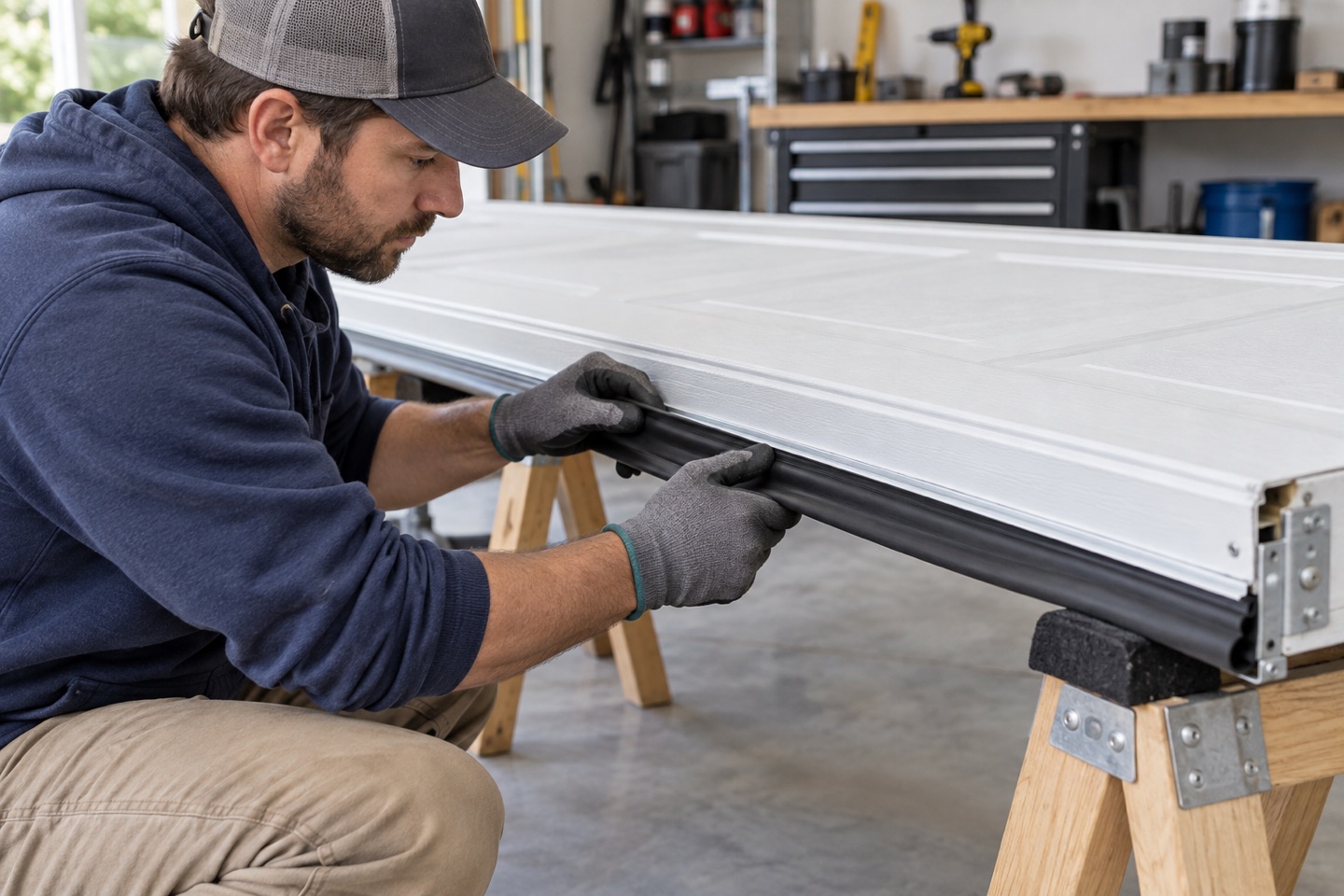
When garage door weather seals need replacement
Call when the door changes how it moves, sounds, balances, seals, or responds. A full-system inspection matters because one visible symptom may be caused by another component.
- Worn bottom seals
- Damaged seal retainers
- Side and top weatherstripping
- Daylight around the door
- Water and debris intrusion
- Seal fit and compatibility
Seal the moving door without interfering with travel
Garage doors commonly use a flexible bottom seal in a retainer plus weatherstripping along the sides and top. The correct profile and size depend on the door, retainer, floor contact, and existing trim. Service can address hardened, torn, flattened, missing, or poorly fitting seals while checking that the door closes and reverses normally.
What a new garage door seal can address
Properly fitted weather seals can reduce daylight at the perimeter and help limit wind-driven debris, incidental water, insects, and drafts. They cannot correct major floor slope, drainage problems, structural gaps, or a crooked and unbalanced door; those conditions are identified separately rather than hidden behind a new seal.